Wednesday, April 29, 2026

Justice Delayed by Pre-Judgment: Analyzing the Kerala HC Ruling on "Pre-Conceived" GST Notices

In tax proceedings under the Goods and Services Tax (GST) framework, a Show Cause Notice (SCN) serves as the first formal step in initiating legal action against a taxpayer. Its purpose is not merely procedural—it is a core element of natural justice, ensuring that the taxpayer is informed of the allegations and given a real chance to respond. However, when such notices appear to contain predetermined conclusions rather than tentative observations, the fairness of the entire adjudication process comes into question.

In a notable judgment dated 9 March 2026, the Kerala High Court, in Kerala State Self-Financing B.Pharm College Management Association v. Intelligence Officer, addressed two important issues in GST litigation: the legality of issuing a single notice for multiple tax years and the impropriety of show cause notices drafted with an apparent pre-decided mindset.

Background of the Dispute

The petitioner in this matter was an association representing 36 self-financing pharmacy colleges in Kerala. The association was involved in managing the admission process for B.Pharm courses and argued that its activities were exempt from GST under Notification No. 12/2017-Central Tax (Rate), particularly the provision granting exemption to services connected with admissions and examinations conducted by educational institutions.

Despite this position, the GST authorities issued a notice under Section 63 of the CGST/KGST Act alleging tax liability, registration defaults, and potential penalties. The association challenged this notice before the High Court.

Core Issues Raised Before the Court

The petitioner questioned the validity of the notice on two principal grounds:

  • A single show cause notice had been issued covering several assessment periods instead of separate notices for each year.

  • The language used in the notice suggested that the authority had already reached a conclusion on tax liability, leaving little room for genuine adjudication.

Invalidity of a Combined Notice for Multiple Assessment Years

One of the primary objections concerned the issuance of a consolidated notice for different financial years.

The Court emphasized that under GST law, each assessment year is treated independently, with separate legal considerations, limitation periods, and factual determinations. Combining multiple years into a single notice can create procedural complications and undermine the taxpayer’s ability to defend each period distinctly.

Relying on earlier judicial rulings, including Joint Commissioner (Intelligence & Enforcement) v. Lakshmi Mobile Accessories and Tharayil Medicals v. Deputy Commissioner, the Court reaffirmed that such composite notices are legally unsustainable.

Accordingly, the notice was found defective on procedural grounds alone.

Importance of Neutrality in Show Cause Notices

Beyond the procedural flaw, the Court also examined whether the wording of the notice reflected a fair and impartial approach.

A show cause notice should represent only a preliminary view based on available information. It should not communicate a final determination before hearing the taxpayer.

The petitioner argued that the language used in the impugned notice conveyed that the authority had already concluded that GST registration and tax liability existed, making any response from the association merely symbolic.

Supreme Court Principle on Pre-Decided Notices

To assess this issue, the Kerala High Court referred to the Supreme Court’s decision in Oryx Fisheries Pvt. Ltd. v. Union of India (2011), which laid down an important standard for administrative fairness.

The Supreme Court held that if a reasonable person reading a notice feels that the authority has already formed a final opinion and that any reply would serve no practical purpose, the process ceases to be fair.

Applying this principle, the Kerala High Court observed that the notice in question created precisely such an impression.

A valid SCN must:

  • Indicate only a tentative or prima facie conclusion

  • Leave room for rebuttal through evidence and legal submissions

  • Reflect an unbiased adjudicatory mindset

When an authority appears to have made up its mind in advance, the quasi-judicial character of the proceedings is compromised.

Court’s Decision

Considering both the procedural defect and the apparent pre-judgment, the Kerala High Court set aside the impugned notice.

However, the Court did not prevent the department from taking fresh action. Instead, it granted liberty to restart the proceedings subject to proper legal compliance.

The Court specifically directed that:

  • Separate notices must be issued for each assessment year

  • Proceedings must be handled by the appropriate jurisdictional authority

  • Any fresh notice must be drafted in neutral language without expressing final conclusions prematurely

Broader Significance of the Judgment

This ruling has wider implications for taxpayers and tax practitioners.

For Educational Institutions

Entities claiming exemption under GST notifications can take comfort in the fact that such claims must be examined fairly and cannot be rejected through defective procedural shortcuts.

For Tax Professionals

The judgment strengthens the basis for challenging template-based notices that use conclusive language without offering a meaningful hearing.

For Tax Authorities

The decision serves as a reminder that procedural efficiency cannot override legal fairness. A show cause notice is meant to begin an inquiry—not conclude one.

Conclusion

The Kerala High Court’s ruling reinforces a fundamental principle of tax administration: fairness is not optional.

A taxpayer’s right to be heard has real value only when the adjudicating authority remains genuinely open to persuasion. Similarly, procedural requirements such as separate notices for separate assessment years are not technical formalities but safeguards designed to ensure justice.

This judgment is likely to be cited frequently in future GST disputes involving defective notices, reinforcing accountability in tax administration.

Disclaimer: This blog post is for informational purposes only and does not constitute legal advice. For specific case inquiries, please consult with a qualified GST professional.


Bail, Not Jail: Analyzing the P&H High Court’s Landmark Ruling on GST ITC Fraud

India’s Goods and Services Tax (GST) framework was introduced to create a unified indirect tax structure across the country. While the system streamlined taxation, it also opened the door to sophisticated tax fraud schemes, particularly involving fraudulent claims of Input Tax Credit (ITC). A recent ruling by the Punjab & Haryana High Court has brought important clarity on the limits of arrest powers in GST-related economic offences.

In Shivam Gupta v. State of Punjab, decided on 23 February 2026, the Court emphasized that arrest should not be treated as a routine enforcement mechanism and reaffirmed the long-standing legal principle that bail should ordinarily be granted unless compelling circumstances justify detention.

Background of the Dispute

The matter arose from an investigation conducted by the CGST Commissionerate, Ludhiana, concerning three business entities engaged in scrap trading and metal manufacturing:

  • M/s Vasu Multimetals Pvt. Ltd.

  • M/s SVM Multimetals Pvt. Ltd.

  • M/s Ingottastic LLP

According to the tax authorities, these businesses were allegedly involved in generating artificial transactions to claim ineligible ITC.

The department alleged that:

  • GST credit worth approximately ₹53 crore was fraudulently claimed.

  • The disputed invoices were linked to suppliers whose registrations had either been suspended, cancelled, or found to be fictitious.

  • No actual movement of goods supported the invoiced transactions.

  • The total value of suspected bogus invoices exceeded ₹471 crore.

The petitioners, who were directors and partners in the concerned firms, were arrested in September 2025 following departmental searches and examination proceedings under the CGST Act.

Competing Arguments Before the Court

The case presented a direct conflict between the state’s power to investigate economic offences and the individual’s constitutional right to liberty.

Petitioners’ Stand

The defence advanced several arguments:

Legitimate Business Operations
The petitioners maintained that the companies were lawfully established commercial enterprises engaged in genuine business activity.

No Automatic Criminal Liability for Directors
It was argued that holding a managerial designation does not automatically establish personal involvement in alleged fraudulent transactions.

Procedural Irregularities
The petitioners claimed that mandatory legal safeguards under applicable criminal procedure and tax laws had not been properly followed.

Assessment Yet to Be Finalized
Since no formal adjudication had determined the exact tax liability, the defence contended that coercive action through arrest was premature.

Revenue’s Position

The tax authorities opposed bail on multiple grounds:

Large-Scale Revenue Loss
The alleged tax fraud involved substantial public revenue, warranting strict enforcement action.

Active Participation
The petitioners were described as principal decision-makers who allegedly played a central role in the transactions under scrutiny.

Strong Documentary Trail
Authorities pointed to electronic records, invoice trails, e-way bill data, and financial documentation as evidence supporting the allegations.

Statutory Arrest Powers
The department argued that the CGST Act authorizes arrest where there is sufficient reason to believe a cognizable offence has been committed, even before completion of tax adjudication.

Court’s Analysis

Justice Manisha Batra adopted a measured approach, balancing the seriousness of the allegations with established criminal law principles.

1. Nature of the Alleged Offence

The Court observed that the relevant GST offence carried a maximum punishment of five years’ imprisonment. Importantly, such offences are capable of being compounded under the statutory framework.

This distinction mattered because offences permitting settlement through compounding are generally not viewed in the same category as grave, violent, or non-compoundable crimes.

2. Documentary Nature of the Evidence

A major factor in the Court’s reasoning was the character of the evidence.

Since the prosecution’s case was primarily based on invoices, returns, electronic records, and financial documentation, the Court found limited risk of evidence tampering.

Where documentary evidence is already in official possession, prolonged custodial interrogation becomes harder to justify.

This significantly weakened the argument for continued incarceration.

3. Pending Tax Determination

Although the Court acknowledged that tax assessment is not always a legal precondition for arrest, it also recognized that the exact liability had not yet been conclusively determined.

Without finalized adjudication, the ultimate quantum of alleged tax evasion remained unresolved.

The Court considered continued detention disproportionate in such circumstances.

4. Constitutional Protection of Liberty

Reaffirming settled jurisprudence, the Court relied on the principle that detention before conviction should remain an exception.

Referring to established Supreme Court precedents, the Court emphasized that bail cannot be denied merely to impose punishment before trial.

Presumption of innocence remains intact until guilt is proven through due legal process.

Bail Conditions Imposed

While granting relief, the Court imposed safeguards to protect the investigation and judicial process.

The petitioners were required to:

  • Deposit their passports

  • Avoid transferring or disposing of business assets linked to the investigation

  • Fully cooperate with proceedings

  • Attend hearings without unnecessary delay

  • Refrain from involvement in similar alleged offences

The Court made it clear that violation of these conditions could lead to cancellation of bail.

Wider Implications of the Judgment

This ruling has meaningful implications for GST enforcement and business litigation.

Restricting Overuse of Arrest Powers

The decision signals judicial caution against using arrest as a pressure tactic during tax investigations.

Economic offences may be serious, but seriousness alone does not justify indefinite detention.

Recognition of Digital Evidence Framework

GST enforcement is heavily dependent on digital documentation.

Since tax authorities typically control access to GST filings, invoices, and system-generated data, the risk of destruction of evidence is materially lower compared to conventional criminal cases.

This may increasingly influence bail decisions in future GST prosecutions.

Guidance for Business Leaders

Directors and partners facing GST investigations should note that courts may distinguish between ownership roles and actual operational misconduct.

However, protection from pre-trial detention does not amount to exoneration.

Civil tax consequences, prosecution, penalties, and reputational risks may still continue.

Conclusion

The Shivam Gupta ruling reinforces an important legal safeguard in economic offence litigation: arrest is not a substitute for investigation, and detention is not a shortcut to adjudication.

While tax authorities retain broad investigative powers under GST law, those powers remain subject to constitutional scrutiny.

The judgment serves as a reminder that even in cases involving substantial alleged tax fraud, personal liberty cannot be curtailed without clear justification.

Legal Disclaimer: This blog post is for informational purposes only and does not constitute legal advice. For specific cases, please consult with a qualified legal professional.

Bombay High Court Quashes Consolidated GST Show Cause Notices

In an important decision strengthening taxpayer protections, the Nagpur Bench of the Bombay High Court has ruled that GST authorities cannot issue a single Show Cause Notice (SCN) combining alleged tax liabilities from multiple financial years into one proceeding. The judgment in Shree Balaji Traders v. GST Commissioner, delivered on 27 February 2026, underscores the annual structure of the GST framework and reinforces procedural safeguards available to taxpayers.

Case Background

The dispute arose when Shree Balaji Traders received a notice under Section 74(1) of the Central Goods and Services Tax Act, alleging suppression of taxable turnover and short payment of tax. The notice covered the period from September 2020 to July 2023, thereby including portions of four separate financial years—2020–21, 2021–22, 2022–23, and 2023–24.

The petitioner challenged the notice before the High Court, contending that GST assessments are structured on a year-by-year basis and that combining multiple financial years into a single proceeding violates the statutory framework.

Central Question Before the Court

The principal issue before the Court was whether the tax department has the authority to issue one consolidated show cause notice for multiple financial years, particularly in cases involving allegations of suppression or fraud.

The Revenue relied on judicial precedent from the Delhi High Court, particularly Mathur Polymers v. Union of India, where a broader interpretation had been taken in circumstances involving alleged fraudulent tax arrangements. The argument was that where transactions form part of a common pattern, consolidation may be justified.

However, the Bombay High Court adopted a different interpretation.

Court’s Analysis

After examining the structure of the GST legislation, the Court concluded that the law contemplates separate treatment for each financial year, making composite notices legally unsustainable.

Separate Limitation Periods for Each Year

A key consideration was the limitation framework under Sections 73 and 74 of the CGST Act.

The Court observed that the statutory timeline for issuing adjudication orders is linked to the due date of the annual return for the relevant financial year. Because each year has its own independent limitation clock, combining multiple years into one notice effectively disregards these separate statutory timelines.

This, according to the Court, would be inconsistent with the legislative design.

GST Operates Through Distinct Tax Periods

The Court also examined the statutory definition of “tax period” and the broader compliance structure under GST.

Since returns, reconciliations, and assessments are organized around clearly identifiable tax periods and financial years, recovery proceedings must follow the same framework. The Court found that the GST regime does not support merging multiple assessment years into a single adjudicatory exercise unless expressly permitted by statute.

No such enabling provision was found.

Prejudice to the Taxpayer

Another major concern was procedural fairness.

The Court noted that a taxpayer defending a GST demand must be able to respond to allegations with clarity and precision. Combining several years into a single notice may obscure year-specific facts, legal positions, reconciliations, and evidentiary explanations.

Such consolidation may significantly impair the taxpayer’s ability to mount an effective defence.

Fraud Allegations Do Not Change the Legal Position

The Revenue argued that cases involving fraud or suppression should be treated differently, especially since Section 74 deals with such serious allegations.

The Court rejected this interpretation.

It clarified that Section 74 merely provides an extended limitation period where fraud, wilful misstatement, or suppression is alleged. The provision does not grant authority to collapse multiple financial years into one combined proceeding.

Serious allegations cannot override the procedural structure established by the statute.

Divergence from Delhi High Court View

The department also pointed out that the Supreme Court had declined to interfere with the Delhi High Court’s earlier ruling supporting consolidated notices in certain contexts.

The Bombay High Court addressed this argument directly.

It explained that dismissal of a challenge at the admission stage, without a detailed ruling on merits, does not create binding precedent applicable across all jurisdictions.

Further, the Court emphasized that it remained bound by its own earlier Division Bench decisions, including Milroc Good Earth Developers and Rite Water Solutions, which supported separate treatment of tax periods.

Practical Significance for Businesses

This ruling carries important practical consequences for taxpayers and tax professionals.

Strong Ground to Challenge Defective Notices

Businesses receiving composite show cause notices spanning multiple years may now have a persuasive basis to question the validity of such proceedings, particularly within jurisdictions following similar reasoning.

Better Record Management Becomes Essential

Since disputes may be examined on a year-specific basis, businesses should maintain documentation, reconciliations, and supporting evidence in clearly segregated financial-year formats.

Strong documentation remains the first line of defence.

Revenue Can Reinitiate Proceedings Correctly

The judgment does not automatically eliminate the underlying tax exposure.

The Court permitted the department to restart proceedings by issuing fresh notices in accordance with law. The defect identified was procedural, not necessarily substantive.

Conclusion

The Shree Balaji Traders decision reinforces an important principle in GST administration: statutory procedure matters as much as substantive tax liability.

Tax authorities cannot bypass the annual architecture of the GST law for administrative convenience, even where serious allegations are involved.

For taxpayers, the judgment serves as a meaningful procedural safeguard, ensuring that any enforcement action must comply with the structure and fairness built into the legislation.


Tuesday, April 28, 2026

The GST Voucher Verdict: Why the Bombay High Court Quashed a ₹12.66 Crore Tax Demand

The world of Indirect Taxation in India has been grappling with the definition and "character" of vouchers since the inception of GST in 2017. Are they "goods"? Are they "money"? Or are they merely instruments of consideration?

In a significant relief for the digital assets and voucher trading industry, the Bombay High Court, in the case of Neha Piyush Shah v. Union of India, has ruled that taxing the entire turnover of voucher sales is unsustainable. The court clarified that only the commission or fee earned by the distributor is subject to GST.

1. Background of the Case

The petitioner, Neha Piyush Shah (trading as Neoniche), was engaged in the business of trading vouchers. Vouchers are defined under Section 2(118) of the CGST Act as instruments accepted as consideration for a supply of goods or services.

The Dispute

The GST department (Respondent No. 2) conducted an audit and noticed a significant mismatch between the petitioner’s Profit & Loss (P&L) statements and their GST returns. The authorities took a rigid stance:

  • They argued that the sale and purchase of vouchers fall under the "Scope of Supply" per Section 7 of the CGST Act.
  • They classified vouchers as "goods."
  • Consequently, they raised a massive demand of ₹12,66,19,880 plus penalties, calculated on the entire turnover of the voucher trading business for the period 2017-18 to 2019-20.

The petitioner challenged this, asserting that they acted as a distributor/agent and should only be taxed on the service margin (commission), not the face value of the vouchers.

2. Key Legal Questions Addressed

The court had to navigate three primary legal hurdles:

  1. Nature of Vouchers: Are vouchers "goods/services" or are they "money/actionable claims"?
  2. Taxable Base: Should GST be levied on the gross value of the voucher or only on the distributor's commission?
  3. Departmental Clarity: How do recent government circulars impact past demands?

3. The Turning Point: Circular No. 243/37/2024-GST

One of the strongest pillars of the court's decision was the recent Circular No. 243/37/2024-GST, issued on December 31, 2024. This circular was released specifically to resolve industry-wide confusion.

The Board’s Clarification:

  • Vouchers are not Supply: The circular states that a voucher is just an instrument creating an obligation to accept it as consideration. Therefore, the transaction of the voucher itself is neither a supply of goods nor services.
  • The Agency Model: Paragraph 4.3 of the circular explicitly mentions that where vouchers are distributed via agents on a commission basis, GST is payable only on the commission/fee.
  • Underlying Supply: Only the actual goods or services for which the voucher is redeemed are taxable at their respective rates.

4. Judicial Precedents Cited

The Bombay High Court relied on two heavy-hitting precedents:

A. Sodexo SVC India (P.) Ltd. v. State of Maharashtra (Supreme Court)

The Apex Court had previously held that vouchers (like Sodexo meal passes) are not "goods" but are "pre-paid instruments." They are essentially a medium of exchange, akin to currency, which becomes taxable only when redeemed for actual goods/services.

B. Premier Sales Promotion (P.) Ltd. v. Union of India (Karnataka High Court)

The Karnataka HC had ruled that vouchers are neither goods nor services. It compared vouchers to "printed forms" that act like currency. The value printed on the voucher is transacted at the time of redemption, not at the time of distribution.

5. The Court’s Ruling and Observations

The Division Bench, comprising Justice G. S. Kulkarni and Justice Aarti Sathe, found the Department’s Order-in-Original to be flawed for several reasons:

  1. Inconsistency with Law: The Revenue’s attempt to tax the entire turnover ignored the definition of 'money' under Section 2(75) and the specialized nature of vouchers.
  2. Erroneous Classification: By treating the petitioner as a seller of "goods" rather than a service-providing agent, the department overstepped the legal framework.
  3. Failure to Consider Evidence: The department had rejected the petitioner’s claims simply because they hadn't produced specific ledgers, without considering the legal character of the transactions.

The Verdict:

"Prima facie, it appears that insofar as the petitioner is concerned, who is receiving commission in dealing with vouchers, such commission/fees alone would be liable to GST and not the entire turnover."

The court quashed and set aside the ₹12.66 crore demand and remanded the matter back to the authorities for a de novo (fresh) consideration in light of the 2024 Circular.

6. Significant Legislative Update: The 2025 Amendment

The judgment also touched upon a critical legislative change. The Finance Act, 2025 (notified in September 2025), deleted Section 12(4) of the CGST Act.

Previously, Section 12(4) provided specific rules for the "time of supply" of vouchers. Its deletion signals a shift in how the government intends to treat vouchers moving forward—moving away from treating them as independent taxable events at the point of issuance.

7. Industry Implications: What This Means for Businesses

This judgment is a massive victory for fintech companies, e-commerce platforms, and marketing agencies dealing in gift cards, coupons, and brand vouchers.

  • Avoidance of Double Taxation: If the entire turnover were taxed at the distribution level AND the redemption level, it would lead to a cascading tax effect.
  • Revenue Recognition: Businesses can now confidently report only their "commission income" as their taxable turnover for GST purposes.
  • Protection Against Past Demands: Since the 2024 Circular is clarificatory, it has retrospective application, providing a shield for businesses facing similar audits for the 2017–2020 period.

8. Conclusion

The Bombay High Court’s decision in Neha Piyush Shah is a triumph of logic over literalism. By distinguishing between the instrument of payment (the voucher) and the taxable supply (the final goods/services), the court has ensured that distributors are not unfairly penalized for the high "face value" of the products they move.

For taxpayers, the message is clear: ensure your agency agreements and commission structures are well-documented. For the department, the message is equally clear: turnover does not always equal taxable supply.

Key Takeaways Table

Feature

Department's Original View

High Court / Circular View

Classification

Vouchers = Goods

Vouchers = Instruments of Consideration

Taxable Base

Entire Sale Turnover

Commission / Service Fee only

Time of Supply

Date of Issue/Sale

Upon Redemption of underlying goods

Status of Agent

Principal Seller

Service Provider (Agent)

Disclaimer: This blog post is for informational purposes only and does not constitute legal advice. For specific cases, consult a qualified GST practitioner or legal counsel.

The Boundaries of GST Advance Rulings: Lessons from the Varalakshmi Starch Case

In the complex landscape of Goods and Services Tax (GST), clarity is a currency. Businesses often turn to the Authority for Advance Ruling (AAR) to mitigate future litigation risks regarding classification, rates, or exemptions. However, a recent ruling by the Tamil Nadu AAR serves as a stark reminder: you cannot ask the AAR about your neighbor's business, even if it impacts your industry.

1. The Context: A Curiosity About "Sago Pulp"

The applicant, M/s. Varalakshmi Starch Industries Pvt. Ltd., is a registered manufacturer of tapioca starch and sago. Their production process is straightforward: they crush tapioca tubers to produce sago and sell the resulting residue as a by-product.

The spark for the application was industry observation. The applicant noticed that other manufacturers in the Namakkal district were purchasing a commodity called "Sago Pulp" as a raw material in massive quantities. Interestingly, the applicant themselves did not use, produce, or sell "Sago Pulp."

Driven by a desire to understand the legal standing of this commodity—specifically its existence in the GST tariff, its HSN code, and its tax rate—the company approached the AAR.

2. The Questions Posed to the AAR

The applicant sought answers to two specific queries:

  1. Existence: Does any commodity exist in GST by the name of 'Sago Pulp'?
  2. Classification: If it exists, what is its HSN code and applicable rate of tax?

The applicant’s internal interpretation was that no such commodity (with 40-60% water content) exists in the GST tariff for sago production, other than the tapioca tuber itself.

3. The Legal Hurdle: Section 95 of the CGST Act

The AAR’s decision did not hinge on the chemical composition of sago or the HSN directory. Instead, it focused on the maintainability of the application under Section 95 of the CGST/TNGST Act, 2017.

The Definition of "Advance Ruling"

Under Section 95(a), an "advance ruling" is defined as a decision provided to an applicant on matters specified in Section 97(2) "in relation to the supply of goods or services or both being undertaken or proposed to be undertaken by the applicant."

The AAR highlighted two fatal flaws in the application:

  • No Actual Supply: The applicant admitted they do not currently supply "Sago Pulp."
  • No Proposed Supply: The applicant had no intention or proposal to deal in "Sago Pulp" in the future.

Key Takeaway: The AAR is not a forum for academic inquiries or industry-wide research. It is a tool for taxpayers to resolve their own specific tax liabilities.

4. The Ruling: Application Rejected

During the personal hearing, the members of the Authority were direct. They informed the applicant that because the queries did not relate to a supply undertaken or proposed by them, the questions fell outside the statutory scope of the AAR.

The applicant acknowledged this legal position, leading the Authority to rule:

"No ruling is issued in this case, as the question put forth by the applicant does not fall under the scope of the definition of 'Advance Ruling' defined under Section 97(a)."

5. Critical Analysis for Businesses

This case underscores several strategic points for GST compliance and litigation:

A. The "Skin in the Game" Requirement

You must have a direct commercial interest in the transaction you are asking about. If you are a buyer trying to determine if your supplier is charging the right rate, you technically cannot seek an advance ruling on their supply. The ruling must concern your liability as a supplier or your eligibility for credits/registration.

B. Avoid "Fishing Expeditions"

The applicant in this case was likely trying to understand if competitors were gaining an unfair advantage or if there was a gap in the tariff they could exploit. While these are valid business concerns, the AAR is protected by law from being used for "fishing expeditions" into the tax treatments of third parties.

C. The Importance of "Proposed" Supply

If the applicant had framed the request as a "proposed" diversification into the sale or manufacture of sago pulp, the AAR might have been forced to answer. However, the applicant’s honesty regarding their lack of involvement in the product led to the swift rejection.

Conclusion

The Varalakshmi Starch Industries case is a textbook example of the procedural rigors of GST law. Before approaching the Authority for Advance Ruling, businesses must ensure that the query is deeply rooted in their own financial and operational reality.

Disclaimer: This post is for informational purposes only and does not constitute legal or tax advice. 

Monday, April 27, 2026

Navigating the Strict Contours of Limitation: A Deep Dive into Sri Balaji Metallics (P.) Ltd. vs. Commissioner of CT and GST

 The Goods and Services Tax (GST) regime in India was designed to be a streamlined, "one nation, one tax" system. However, for many taxpayers, the procedural complexities—specifically regarding timelines for appeals—have become a legal minefield. A recent judgment by the High Court of Orissa in the case of Sri Balaji Metallics (P.) Ltd. vs. Commissioner of CT and GST serves as a stark reminder: in the eyes of the law, "limitation" is not just a suggestion; it is a rigid boundary that even the courts are hesitant to cross.

This case, decided on March 12, 2026, reinforces a critical principle of tax jurisprudence: when a statute provides an "outer cap" for condoning delay, no authority—not even an appellate one—can extend it, regardless of how "sufficient" the cause for delay might seem.

The Heart of the Dispute: Fact vs. Record

The petitioner, Sri Balaji Metallics (P.) Ltd., found itself facing an adverse order passed under Section 73 of the CGST/OGST Act. This order, issued via Form GST DRC-07, created a tax liability that the company intended to challenge.

The Petitioner’s Argument:

The company claimed they were unaware of the order until June 14, 2024, when their bank account was suddenly attached by the tax department. They argued that the three-month limitation period for filing an appeal under Section 107(1) should only begin from the date they "actually" became aware of the order (the date of communication).

The Revenue’s Position:

The tax authorities maintained that the order was passed on November 21, 2023, and was communicated to the taxpayer on the very same day.

The Legal Framework: Section 107 of the CGST Act

To understand why the High Court ruled the way it did, we must look at the mechanics of Section 107:

  1. Section 107(1): An aggrieved person may appeal an order within three months from the date on which the said decision or order is communicated to such person.
  2. Section 107(4): The Appellate Authority has the power to condone a delay of one additional month (the "grace period") if they are satisfied that there was "sufficient cause" for the delay.

In total, a taxpayer has a maximum of four months (3 + 1) to file an appeal. After this four-month window closes, the statute effectively "locks the door."

The Turning Point: The Admission in Form GST APL-01

The High Court's decision didn't hinge on complex legal theories, but rather on a procedural "self-goal" by the petitioner.

When filing an appeal, a taxpayer must use Form GST APL-01. In this case, the court observed that in the petitioner’s own filing, they had noted that the Order-in-Original was passed on November 21, 2023, and—crucially—that it was duly communicated on the same day.

The Court noted:

"The moment the appellant admitted that the order has been communicated in accordance with the provisions... it would be deemed to have been so communicated and the period of limitation would start from the said date."

Because the petitioner admitted to the communication date in their own paperwork, their later claim (that they only found out about the order via bank attachment months later) was legally untenable.

Key Takeaways for Taxpayers and Professionals

1. The "Outer Cap" is Absolute

The ruling clarifies that Section 107(4) acts as a mandatory "outer cap." Unlike Section 5 of the Limitation Act, which gives courts broad powers to condone delays in the interest of justice, GST law specifically limits this power. Once the extra one month passes, the Appellate Authority is "denuded" of the power to help you.

2. Communication is Sine Qua Non

The Court agreed that the limitation starts from the date of communication, not the date of the order. However, "communication" in the digital GST era usually means the date the order is uploaded to the GST portal or sent via registered email. Taxpayers must regularly monitor their dashboards; claiming "I didn't check my email" is rarely a valid defense.

3. Precision in Documentation

The dismissal of this writ petition was largely due to the discrepancy between the petitioner's argument and their own Form GST APL-01. When drafting appeals, every date entered is a legal admission.

Conclusion: A Lesson in Vigilance

The Orissa High Court has sent a clear message: procedural discipline is as important as the merits of your case. For Sri Balaji Metallics (P.) Ltd., the merits of their tax dispute were never even heard because the door of limitation had already slammed shut.

For businesses operating under GST, the strategy is clear:

  • Audit your digital communications weekly.
  • Acknowledge dates accurately in filings.
  • Act within the 90-day window, treating the 30-day extension as a true emergency backup, not a standard timeline.

In the world of tax litigation, time doesn't just fly—it expires.

Disclaimer: This analysis is based on the judgment dated March 12, 2026. For specific legal assistance regarding your GST returns or notices, please consult with a legal professional.

Beyond the Dashboard: Why GSTR Mismatches Cannot Justify Automatic ITC Rejection

 In the early years of the Goods and Services Tax (GST) implementation, the phrase "mismatch" became a source of significant anxiety for Indian taxpayers. For many, the transition from legacy systems to a real-time digital ledger felt less like a reform and more like a technical minefield.

On February 18, 2026, the High Court of Karnataka delivered a pivotal judgment in the case of Tanveer v. State of Karnataka, reinforcing a fundamental legal principle: The GST portal is a tool for administration, not a replacement for judicial adjudication.

1. The Core Dispute: Data vs. Documents

The case centered on a registered dealer in iron and steel who faced scrutiny for the financial year 2017-18—the inaugural year of GST. The tax authorities issued a demand for tax, interest, and penalties based almost exclusively on discrepancies between:

  • GSTR-3B: The summary return filed by the taxpayer.
  • GSTR-1: The outward supply return.
  • GSTR-2A: The auto-generated read-only return reflecting purchases.

The revenue department’s stance was mechanical: if the data in GSTR-2A did not mirror the ITC claimed in GSTR-3B, the credit was deemed "wrongfully availed."


2. The Court’s Intervention: A Blow to "Mechanical" Adjudication

Justice K.S. Hemalekha, presiding over the matter, identified several systemic failures in how the "Proper Officer" handled the case. The judgment (2026) 41 Centax 59 (Kar.) serves as a blueprint for what constitutes a fair tax assessment.

A. The Primacy of Independent Verification

The Court observed that the impugned order was "largely based on a portal mismatch." It held that an officer cannot simply point to a computer-generated table and demand payment. Instead, the officer has a legal obligation to perform an independent examination of:

  1. Purchase Registers: To verify the actual acquisition of goods.
  2. Tax Invoices: To ensure the tax was charged by the supplier.
  3. Supply Status: To confirm the movement of goods.
  4. Reconciliation Statements: To understand why data points might differ.

B. The "Initial Implementation" Defense

The Court acknowledged that 2017-18 was a year of "bona fide reporting errors" due to the novelty of the GST system. By ignoring the taxpayer’s plea for reconciliation, the department failed to account for the steep learning curve businesses faced during the GST rollout.

3. Natural Justice: More Than a Formality

A significant portion of the ruling focused on Section 75(4) of the CGST Act, which mandates a personal hearing where an adverse decision is contemplated.

The Court found that the department had failed to demonstrate meaningful compliance with this section. In the eyes of the law, a "personal hearing" is not just a checkbox; it is a vital opportunity for a taxpayer to explain the "why" behind the numbers.

"The denial of ITC solely on GSTR-2A mismatch without verifying supplies compliance and books of account would defeat the scheme of GST." — High Court of Karnataka

4. Why This Matters for Your Business

This judgment is a victory for substantive law over procedural technicalities. It provides three critical protections for businesses:

1. The Death of "Auto-Pilot" Assessments

Tax officers can no longer hide behind portal-generated DRC-01 notices without engaging with the underlying evidence. If an officer refuses to look at your physical invoices because the "system says no," they are in violation of the principles laid down in this case.

2. Writ Jurisdiction is Still Available

While the Revenue argued that the petitioner should have filed a regular appeal (Section 107), the Court ruled that Writ Jurisdiction (Article 226) is maintainable when:

  • Principles of natural justice are violated.
  • The order is passed mechanically.
  • The procedural safeguards are ignored.

3. Utilization of Circular No. 183/15/22-GST

The Court specifically directed the authorities to consider Circular No. 183, which provides a mechanism for verifying ITC in cases of mismatch for the years 2017-18 and 2018-19.

5. Strategic Takeaways for Taxpayers

If your business is facing a demand based on GSTR-2A mismatches, here is your roadmap for defense:

Action Item

Why it Matters

Maintain a Robust Purchase Register

This is your primary shield against "mechanical" data rejection.

Prepare Reconciliation Tables

Clearly map every GSTR-3B entry to a specific invoice and supplier.

Demand a Personal Hearing

Explicitly request a hearing in your reply to SCN to preserve your rights u/s 75(4).

Reference the Tanveer Case

Cite this ruling to remind officers that they must perform an "independent examination."


6. Conclusion: A Balanced Ecosystem

The Tanveer v. State of Karnataka judgment restores the balance of power. It reminds the tax administration that while automation is efficient, it is not infallible. The "Scheme of GST" is intended to prevent the cascading of taxes through Input Tax Credit; denying that credit solely because of a portal glitch or a supplier’s filing delay—without checking the buyer's records—is a subversion of the law itself.

As we move further into 2026, this ruling will likely serve as a cornerstone for taxpayers seeking to remand cases where "tabular and computational" reasoning replaced "fair and reasoned" adjudication.

Disclaimer: This analysis is based on the judgment dated 18-02-2026. For specific legal assistance regarding your GST returns or notices, please consult with a legal professional.

Sunday, November 16, 2025

Understanding the Family Office

The term Family Office often evokes images of bullet-proof glass, billionaire dynasties, and vast financial empires. But what exactly does it mean, how has it evolved, and why is it becoming increasingly relevant even beyond the ultra-wealthy? In this post we’ll explore: the definition and functions of a family office; the types, benefits and challenges; recent trends (including what’s happening in 2025); and a few real-life examples of how prominent family offices are operating today.


What is a Family Office?

At its core, a family office is a private entity created to manage the affairs of a wealthy family. According to one standard definition:

“A family office is a private wealth-management advisory firm that serves ultra-high-net-worth individuals (UHNWIs).” (Investopedia)

The key features include:

  • It is single-family (serving one family) or multi-family (serving multiple families) in structure. (Investopedia)

  • It goes beyond mere investment management: it may include tax-and-estate planning, philanthropy, governance, lifestyle services (e.g., staff, travel), and succession planning. (Wikipedia)

  • The objective is often both wealth preservation (across generations) and wealth growth, aligned with the family’s values, identity and long-term legacy. (Family Office)

An excerpt from one resource captures the intent:

“The family office is a unique family business created by and for a single family to provide tailored wealth management solutions … while promoting and preserving the family’s identity, unity, and values.” (Family Office)

In other words, unlike a simple portfolio or private-wealth advisory firm, a family office combines investment, lifestyle and legacy functions in one integrated structure.


Why Do Families Set Up Family Offices?

There are multiple motivations and benefits:

  1. Complexity of wealth: When a family has substantial assets (often hundreds of millions or more), across geographies, asset classes (businesses, real estate, art, trusts), the management burden becomes large. A family office provides a dedicated platform. (Bank of America Private Bank)

  2. Control and confidentiality: Instead of outsourcing all decisions to external advisors, families may prefer to retain direct control, maintain privacy, align investments with family values—and a family office allows this. (Family Office)

  3. Legacy and governance: Succession, inter-generational fairness, family governance, education of the next generation—these are often as important as returns. A family office can embed governance frameworks. (EY)

  4. Economies of scale / cost efficiencies: For very large families, consolidating services—investment, tax, legal, real-estate management—under one roof may be more efficient. (Ocorian)

  5. Flexibility across asset classes: Family offices increasingly seek investments in private markets, venture capital, real assets and infrastructure—beyond public markets. (Wealth Management Services)

In short: as families grow wealthier, more mobile and more multi-generational, the traditional model of “wealth is managed by a private bank” often is insufficient.


Types of Family Offices

We can categorize broadly:

  • Single Family Office (SFO): Serves only one family. Tailored, high control, potentially high cost. (Family Office)

  • Multi Family Office (MFO): Serves multiple families; shares infrastructure and cost among families. Often sits between a private-bank service and a full SFO. (Investopedia)

  • Virtual or Outsourced Family Office: For smaller-scale wealth or families who want “office-style” capabilities but don’t want full heavy infrastructure. They outsource many functions. (Business Insider)

Importantly, the “threshold” for when a family office makes sense has been moving. Historically families with hundreds of millions in assets were the domain; but now even smaller fortunes are exploring leaner models. (Business Insider)


Key Functions & Services

A well-structured family office will coordinate (among others):

  • Investment strategy and portfolio management (public & private markets)

  • Risk management, asset allocation, portfolio oversight

  • Tax planning, estate and trust structuring, succession planning

  • Philanthropy / impact giving

  • Real-estate management, luxury assets, lifestyle management (yachts, art, travel)

  • Family governance: setting family constitutions, education of next generation, family meetings

  • Reporting, accounting, communications across branches of the family

For instance, one article notes that “providing advice and services for ultra-wealthy families under a comprehensive wealth management plan … requires a well-coordinated, collaborative effort by a team of professionals from legal, insurance, investment, estate, business and tax disciplines.” (Investopedia)


Trends in 2025: What’s Changing?

The family-office world is evolving rapidly. Here are some of the key trends for 2025:

  • Asset class shift: According to a 2025 report by PricewaterhouseCoopers (PwC), family offices have increased their allocation to venture capital and private equity over the past decade. For example, the share of family-office investment in VC rose from 17 % in H2 2015 to 38 % in H1 2022, and remained ~31 % in H1 2025. (PwC)

  • At the same time, family offices are rediscovering real-estate and debt financing, increasing their share in those asset classes. (PwC)

  • Globalisation and jurisdictional diversification: Families are locating offices in different geographies, seeking favourable rules, talent, strategic proximity, not just tax advantages. (PwC)

  • Technology and infrastructure: With more complexity, family offices are investing in tech platforms (reporting, risk, integration) and even software vendors servicing family-office needs. (Forbes)

  • Governance & next-generation focus: The “soft” side—family values, inter-generational transfer, education—is getting more attention. For example, an EY/Julius Baer study noted 59 % of families had implemented wills or family constitutions. (EY)

  • Access for smaller wealth: As mentioned earlier, the family-office model is no longer exclusively for the ultra-rich. Smaller, leaner structures (virtual offices, hybrid arrangements) are gaining traction. (Business Insider)

These trends suggest that family offices are no longer passive “wealth warehouses” — they are strategic, active investment engines, governance platforms, and often global in reach.


Recent Real-Life Examples

To ground all this in real life, here are a few compelling examples of family offices in action.

Example 1: Cascade Investment (The family office of Bill Gates)

Image

Image

Image


Image

Image

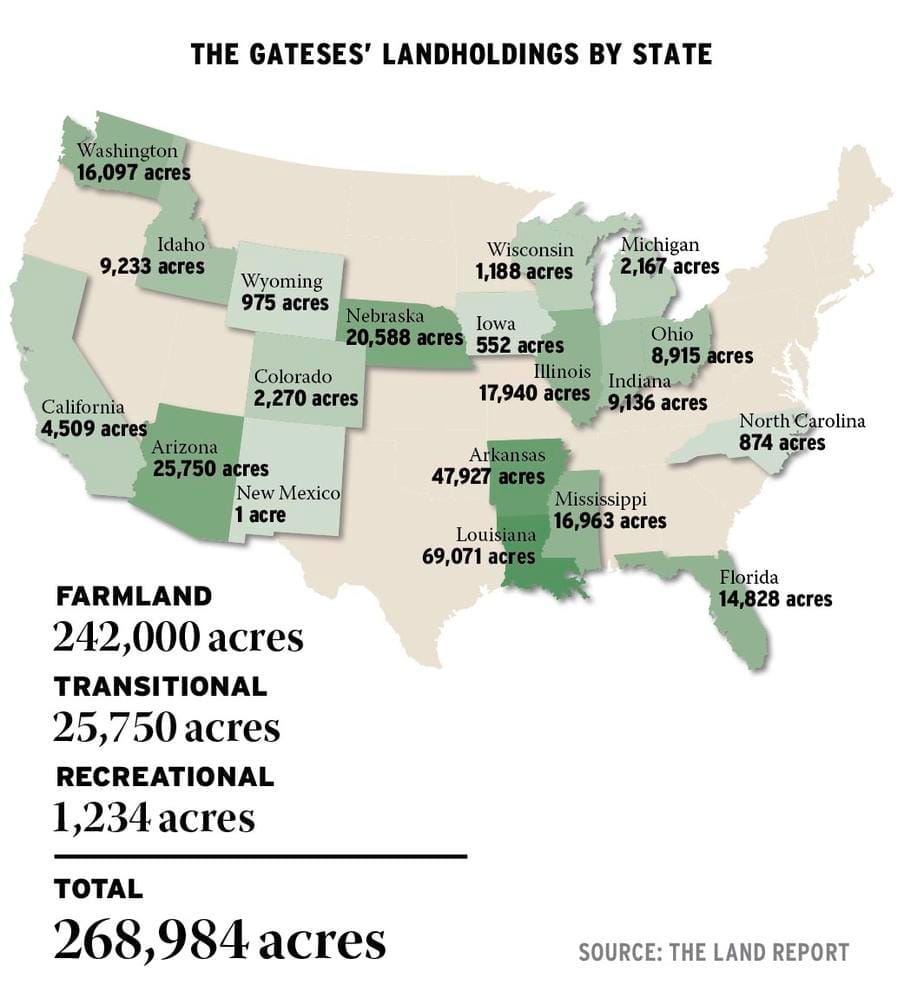
  • Cascade is the private investment vehicle for Bill Gates’ personal wealth (outside his Microsoft stake) and is often described as one of the largest family-office structures in the US. (Altss)

  • Its holdings are diverse: large stakes in companies (for example, one narrative states they held ~21 % of Ecolab) and significant real-estate/farmland holdings. (Simple)

  • Strategy: The family office supports Gates’s philanthropic ambitions (through the Foundation) but also runs a long-term investment engine focused on essential industries, long-term trends, stable cash flows. (Altss)

  • In our context this shows how a family office may (a) hold public equities, (b) hold real assets, (c) focus on long-term compounding rather than short-term trading — in line with a multi-generational mindset.

Example 2: Pontegadea Inversiones (Family office of Amancio Ortega – founder of Zara/Inditex)

Image

Image

Image

Image

Image

Image

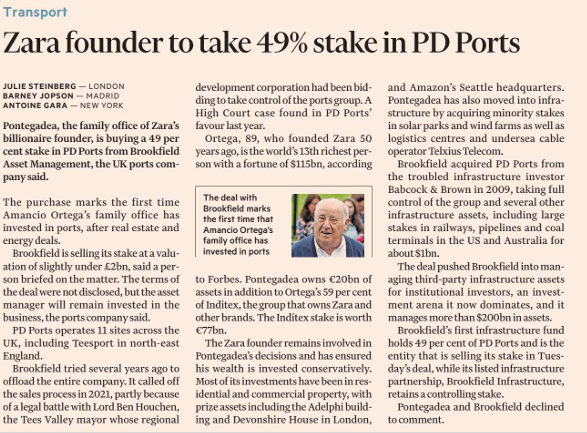
  • A recent headline: In July 2025, it was reported that Pontegadea agreed to acquire a 49 % stake in UK-based logistics and ports company PD Ports from Brookfield Asset Management — marking a further diversification into infrastructure/operating assets. (Reuters)

  • Historically Pontegadea has held a major global real-estate portfolio (office towers, luxury retail, major commercial assets) in cities like London, New York, Miami, etc. (InforCapital)

  • What lessons this gives: even a family office founded on retail-commerce wealth (Zara) is shifting toward infrastructure, global diversification, long-term assets with strong cash flows and growth potential.

Example 3: Indian Family Offices & Start-up Investments

Image

Image

Image

Image

Image

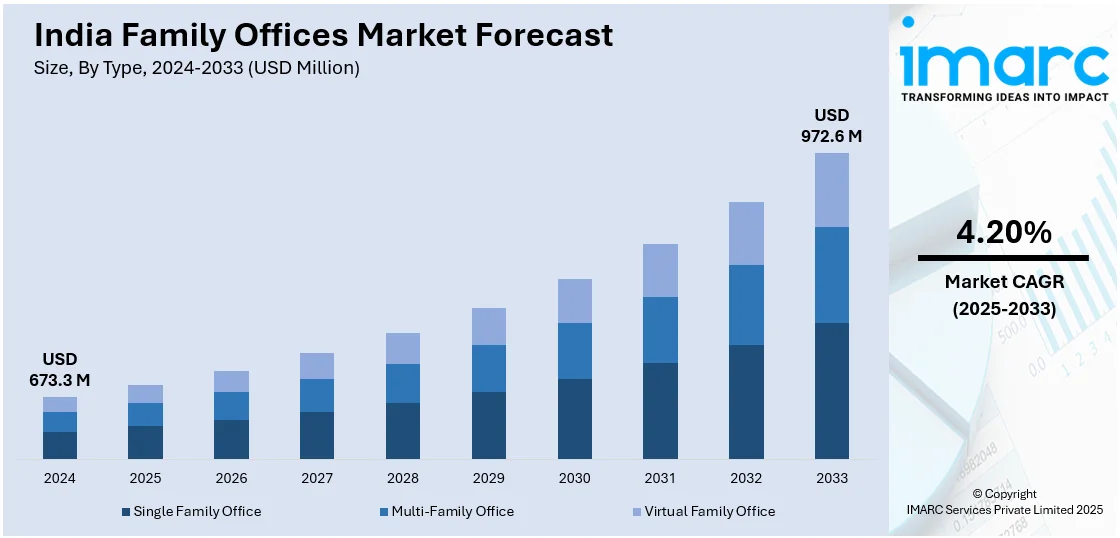
  • An article from August 2025 noted that in Gujarat, traditional business dynasties are increasingly making direct allocations to start-ups (consumer tech, agritech, fintech) and acting more like venture investors, rather than just passive wealth stewards. (The Times of India)

  • Similarly, data shows that Indian family offices are increasingly listed in directories of start-up investors (e.g., “Family Office Tracker: Here’s The List Of 200+ Investors Betting Big On Startups” from Inc42) for the India market. (Inc42 Media)

  • Insight: This shows the extension of the family-office concept in emerging markets — not just preserving legacy wealth but active investing in new high-growth opportunities.


What Value Does a Family Office Provide?

From the above, we can summarise key value-propositions:

  • Holistic management: Coordinated management across investments, tax, estates, real estate, lifestyle, philanthropy

  • Tailored to family needs: Rather than off-the-shelf wealth-management, the family office can reflect the family’s values, risk-tolerance, inter-generation goals

  • Long-term horizon: Family offices often think in decades rather than quarters — enabling illiquid, high-reward investments (venture, infrastructure)

  • Governance and succession: By embedding structures (family charters, education, governance), they help maintain family unity and avoid the “rich family fall‐apart” story

  • Cost-efficiencies at scale: For very large families, running a dedicated office may yield cost savings (and better performance) compared to siloed advisors

  • Diverse asset access: Ability to allocate to private markets, real assets, direct deals, infrastructure, which may not be available to typical retail wealth-structures

Thus, a well-executed family office offers both financial and non-financial benefits to a wealthy family concerned about legacy, continuity, control and values.


Challenges & Risks

However, it’s not all smooth sailing. Some of the major risks include:

  • Cost and scale: Setting up a full SFO is expensive (staff, systems, infrastructure). Some estimates suggest net worth of at least US $100 million (or more) may be required. (Investopedia)

  • Governance failures: Without robust governance, many family offices fail or lead to family conflicts, poor investments or misalignments.

  • Regulatory/compliance risks: Family offices may face regulatory scrutiny (especially when making large direct investments). The US rule-set, for example, has specific exemptions. (web.acaglobal.com)

  • Illiquidity and risk concentration: Investing in private markets or real estate may increase illiquidity, lock-in, and concentration risk.

  • Succession risk: The transition from one generation to the next is fraught; if values, incentives, governance aren’t aligned, wealth can erode.

  • Over-complexity: Some families may over-engineer structures, losing agility. The leaner models (virtual offices) may be more appropriate for smaller wealth.

The recent PwC data shows that the value and volume of family-office deals have suffered a setback in the most recent cycle (July 2023-June 2025) — indicating that the space is not immune to macroeconomic headwinds. (PwC)


What Should Families Considering a Family Office Ask?

If you are advising a family (or part of one) thinking of setting up a family office, some key questions to explore:

  1. What is the core purpose? Wealth preservation? Growth? Philanthropy? Lifestyle? Succession?

  2. What is the family governance framework? Who makes decisions? What are family values? How is the next generation educated and engaged?

  3. What asset-allocation strategy makes sense? Given the size, risk tolerance, time horizon: public vs private, direct vs funds, geography.

  4. What legal and tax structure is appropriate? Location of office, trusts/LLPs, regulatory environment.

  5. What operational model? Full in-house (SFO), outsourced (virtual or hybrid), multi-family shared, or combination.

  6. What technology and data systems? Reporting, dashboards, consolidation, risk monitoring.

  7. How to manage costs, talent, and oversight? Hiring staff, avoiding drift, aligning incentives.

  8. What succession and exit plans exist? For both the office itself (what happens if family chooses to close it) and for future generations.


Relevance to India & Emerging Markets

For Indian families (or families in emerging markets) the family-office model is particularly relevant:

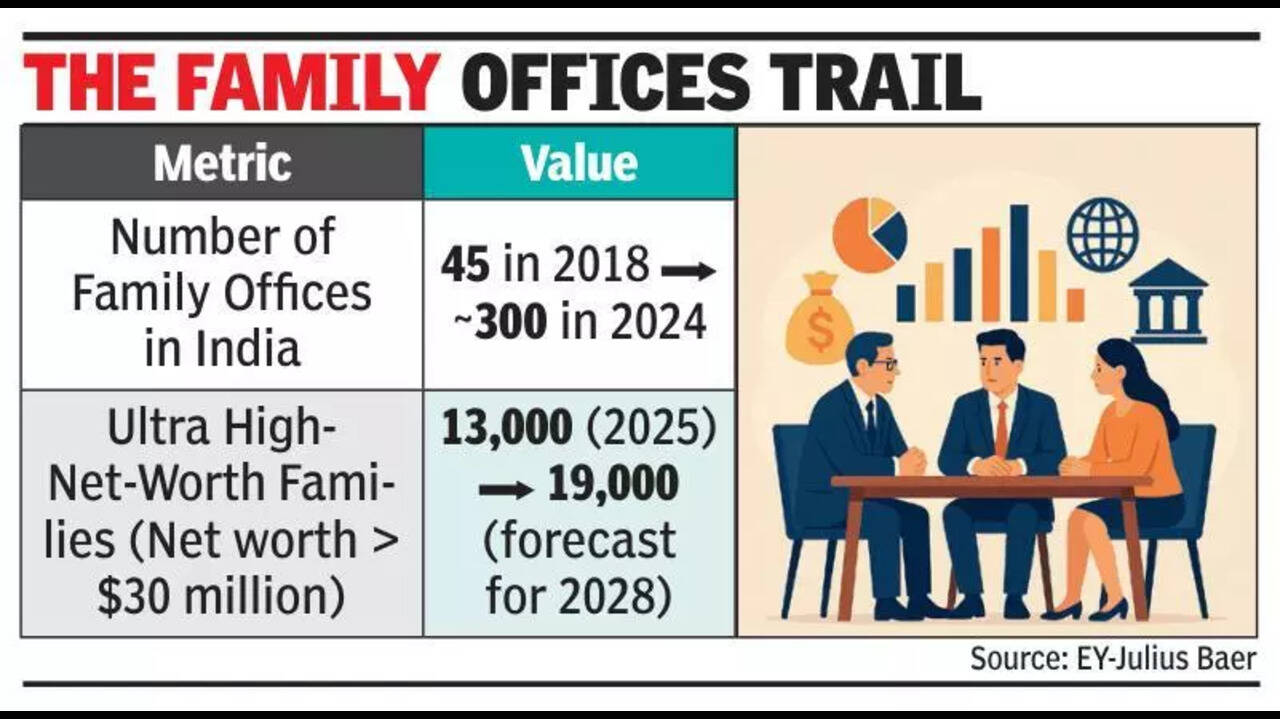
  • India has seen a surge in family offices (or “family business offices”) investing in startups, venture capital and alternative assets. (Inc42 Media)

  • As wealth crosses generations, and globalisation continues (mobility, cross-border assets, philanthropy, second homes abroad), the complexity increases — making a family office structure more relevant.

  • Regulatory/tax considerations: India has its own set of regulatory rules, for example around trusts/laws/regime for family offices may differ; families will need to adapt global models to local context.

  • Capital-allocation choices: Families may migrate from traditional Indian asset classes (real estate, fixed income) towards global equities, private markets, technology or even ESG assets. Indeed, one report noted 25 % of family offices prioritise asset preservation but are actively eyeing global alternatives. (EY)

For someone like you (given your diverse interests, e.g., converting land into carbon-storing project etc), the family-office lens is useful: it reminds us that these structures aren’t just about investing money but aligning investment with mission (e.g., climate, sustainability, inter-generational legacy).


Key Takeaways

  • A family office is a highly customised private vehicle for managing a wealthy family’s assets, governance, succession, philanthropy and lifestyle.

  • With global wealth rising and complexity increasing, family offices are expanding in number, scope and sophistication — beyond the “old money” archetype.

  • Major trends for 2025: more direct/private market investing, greater use of infrastructure/real-assets, increased technology adoption, more global diversification, and more access/more flexible models for smaller wealth.

  • Real-life examples (Cascade, Pontegadea, Indian family offices) show how the model is being applied in varied contexts.

  • While there are definite advantages, setting up and running a family office involves decisions around cost, governance, structure, talent and succession — and families must carefully assess whether a full SFO, a lean hybrid or outsourced model is right for them.

  • For families in India or emerging markets, the family-office idea offers a compelling framework: aligning wealth management, mission, legacy and generational transition in one integrated structure.


Final Thoughts

In the era of globalisation, rapidly changing asset classes (cryptocurrency, venture capital, climate-tech), cross-border mobility, and heightened inter-generational expectations, the family office is more than a financial vehicle; it's a platform for family continuity, aligned values, strategic capital deployment and legacy creation.

For families that ask, “How do we ensure that our wealth and values persist for generations, not just our lifetime?” — the family-office model offers one mature answer. It combines investment, governance, mission and operational discipline in a way that traditional wealth-management may not.

If you are exploring starting a family office (or thinking how to structure your wealth or engage future generations) then the key is to begin with purpose, build governance, choose an asset strategy, select the right operational model and ensure that the architecture remains aligned with the family’s identity and long-term vision.